
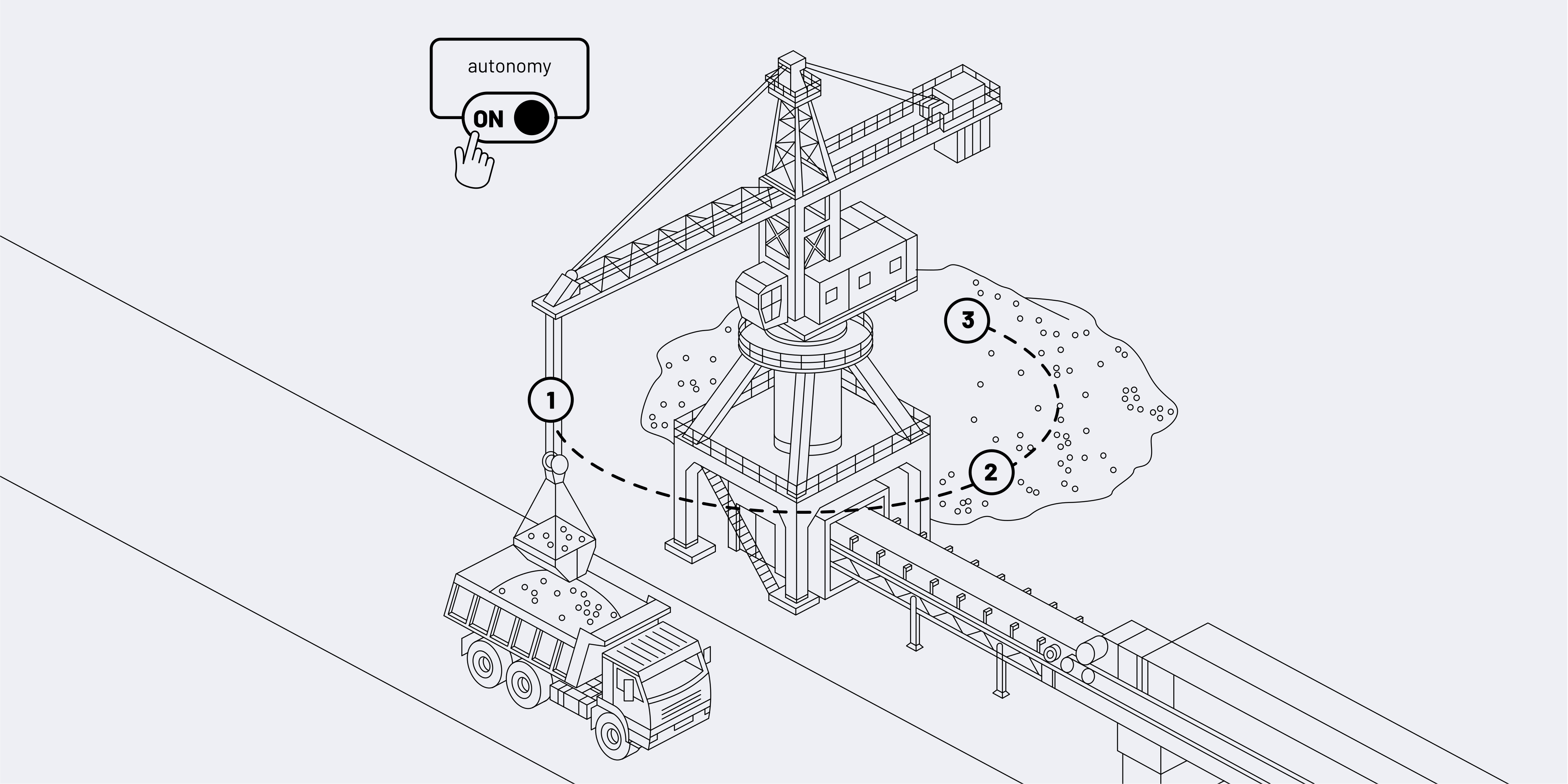
AI based assistant systems:
The Future of Crane Operation
Industrial AI in action:
PSIORI Autonomous Cranes
Autonomous Cranes Instead of Automated Cranes
Operating a crane is a dangerous job. It requires a high degree of concentration on a few repetitive tasks over long periods of time. The strain on crane operators can be alleviated by automated systems.
Conventional crane automation systems are limited by rigid procedures. We have applied our extensive experience with artificial intelligence systems in industrial settings to create a truly autonomous crane control system which can operate in a variable environment. Fully autonomous cranes have now become a reality.
Industrial AI AutoCrane
Our Industrial AI system, AutoCrane, allows crane operators to delegate many of their tasks to the system. In this way, AutoCrane enhances workplace
safety and improves comfort for crane operators.
AutoCrane encompasses a wide range of AI-based solutions: from simple functions such as sway control or navigating to waypoints, via complete workflows such as the autonomous loading and unloading of cargo, all the way to a fully autonomous crane where the AI performs all routine tasks on its own.
AutoCrane offers maximum flexibility and efficiency with its standard hardware and off-the-shelf sensors. The AI-based system controls stationary bridge, gantry, slewing, and tower cranes. It is operated via a modern digital crane control system running on an industrial-grade tablet computer.
Pre-installed or retrofitted
AutoCrane offers maximum flexibility through the use of industry standard compute and regular commercial sensors. Equip your next crane with a pre-installed AutoCrane system, or retrofit your existing cranes with AutoCrane functionality.
CraneAI Product Family: Assistants with Intelligence
AutoCrane can fully control your bridge, gantry, slewing, or tower cranes (full autonomy) or handle specific tasks such as lifting or lowering loads (partial autonomy).
Alternatively, you may use individual AI-based assistants from the CraneAI product family derived from AutoCrane. These assistants offer specific solutions to support your crane operators—ranging from active sway suppression, the setting and retrieving waypoints, to assistants for lifting asymmetrical loads or intelligent path planning and others.
Fully automated crane operation with AutoCrane technology
Fully automated crane operations
AutoCrane uses artificial intelligence to control the crane and performs all routine tasks independently, i.e. autonomously. The crane operator simply monitors the crane's activities and only needs to intervene in exceptional situations.
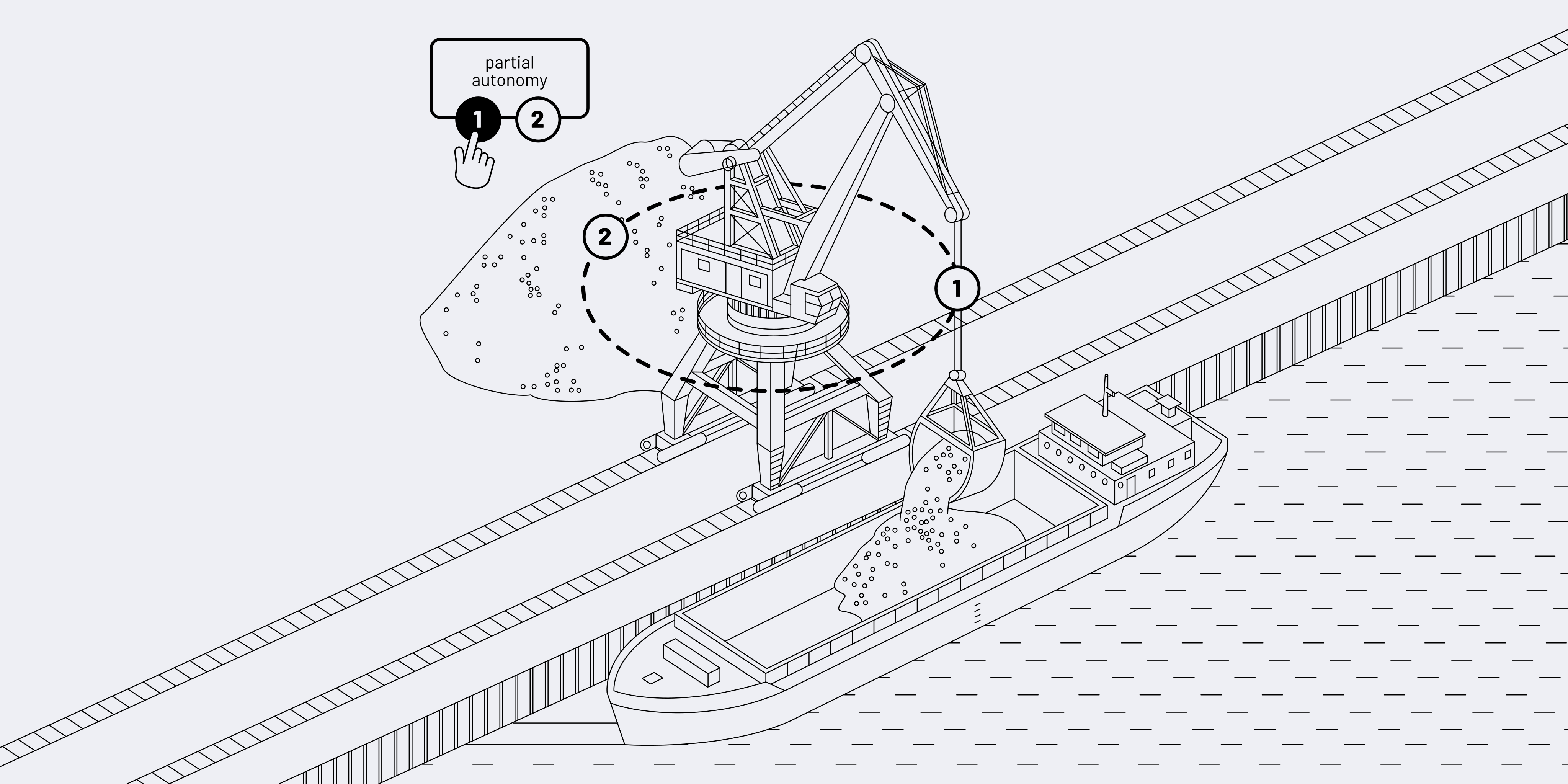
Perform individual tasks autonomously with partial autonomy
Perform individual tasks autonomously
If full autonomy is not desired or possible, the system automatically performs certain individual tasks, while other tasks are controlled by the crane operator. In doing so, the system flexibly takes all environmental parameters into account.
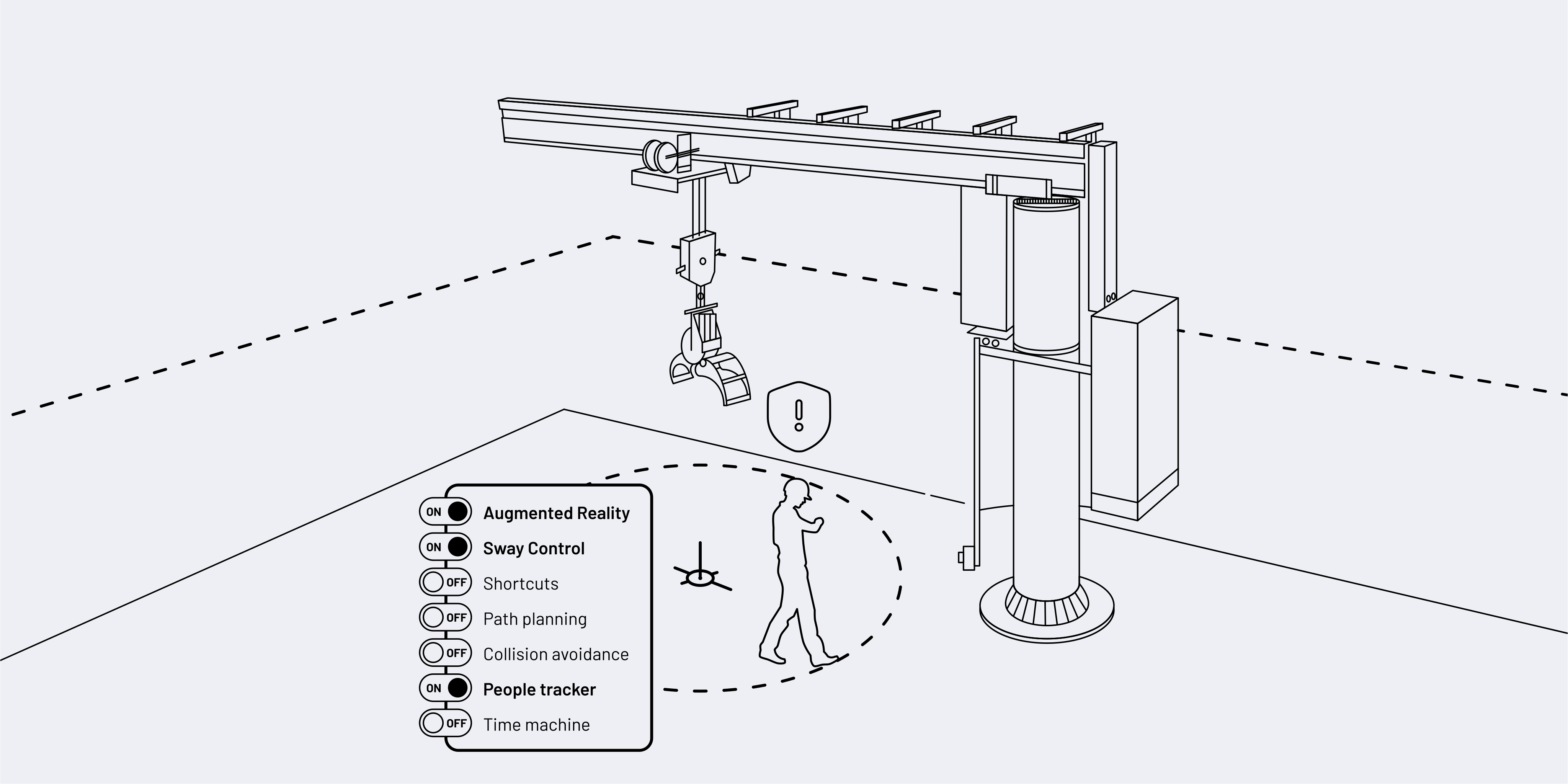
AI based assistance features for crane operators
Intelligent crane control functions
Provide your crane operators with individual CraneAI assistants to support them. Active suppression of sway (linear or rotational), setting waypoints for automatic navigation to targets, the use of augmented reality for crane operators, and the recording of operational data while in motion—these and other features make crane operators’ jobs easier and increase speed, safety, and efficiency in the workplace.
Practical control system for autonomous cranes
A modern, functional HMI
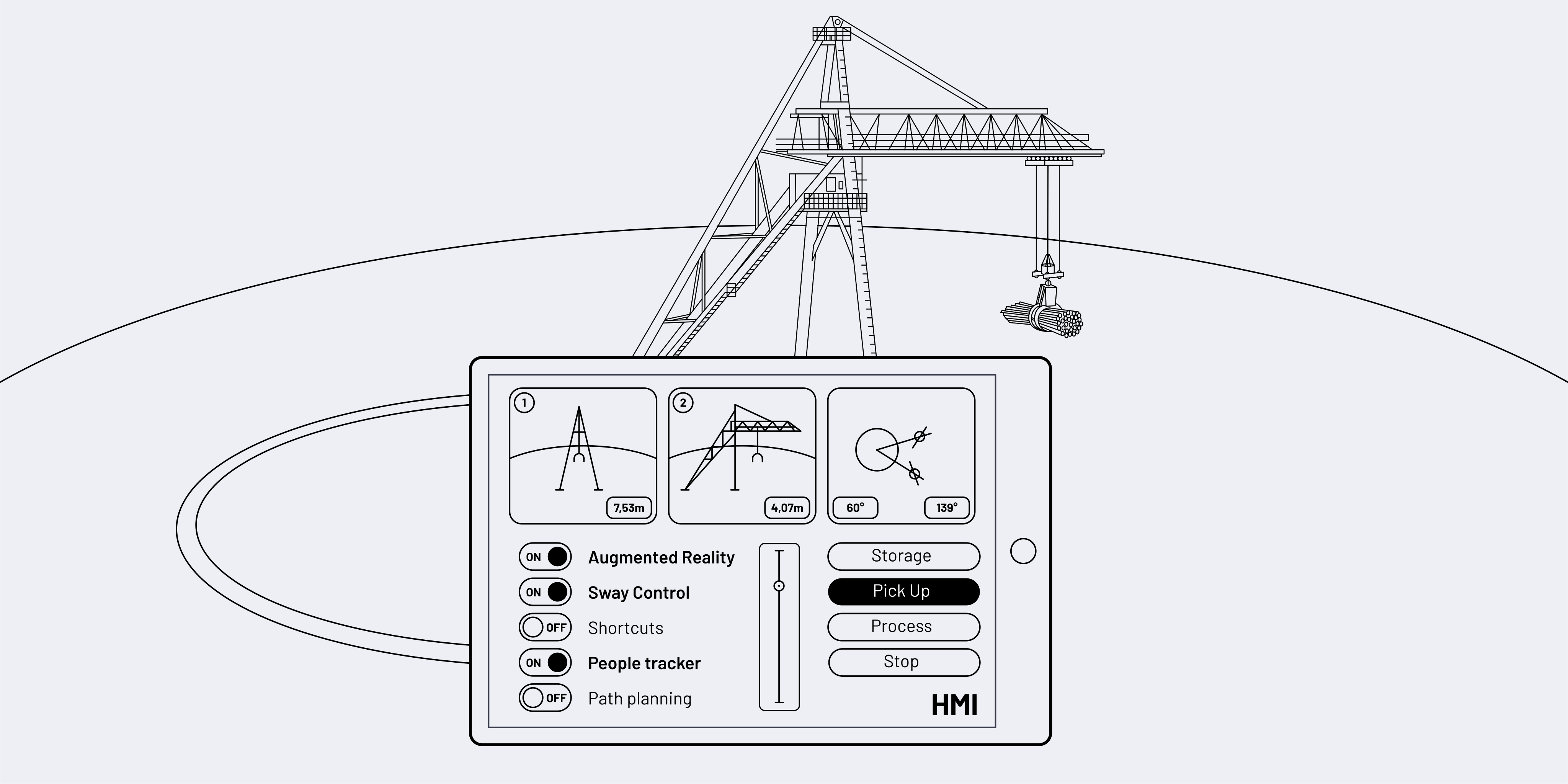
Our clear, modern HMI shows the current and planned crane behaviours, and allows operators to select full autonomy or specific behaviours.
More infoAutonomous crane technology
Industrial AI in Action
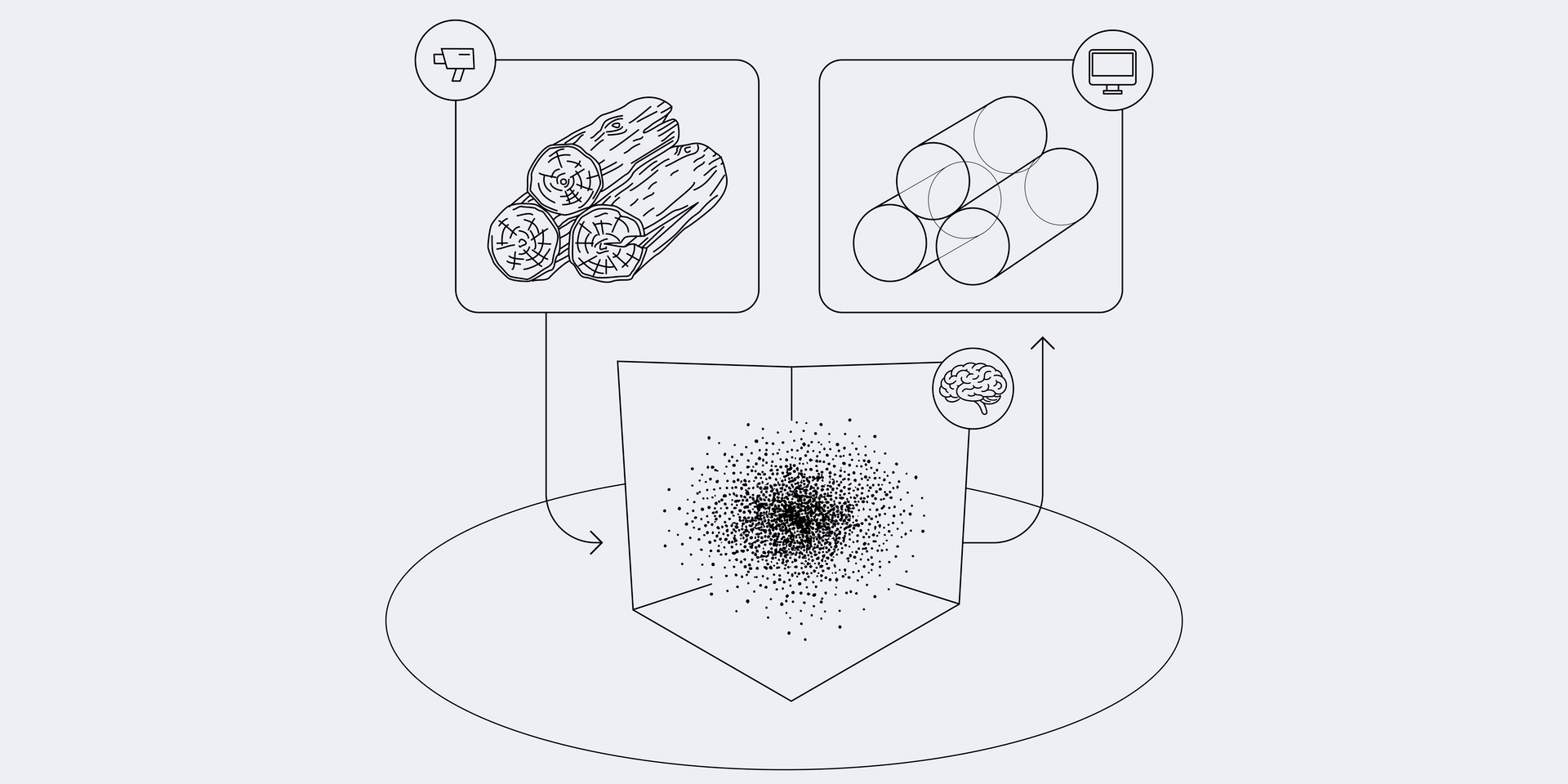
AutoCrane uses visual and LIDAR data to build a map of the working area and to identify loads, vehicles and other objects on which it has been trained. AutoCrane’s sophisticated cognitive architecture ensures that perception and analysis result in the most efficient movement commands.
More infoIndustrial AI Architecture Based on the BDI Model
The Cognitive Architecture of Autonomous Cranes
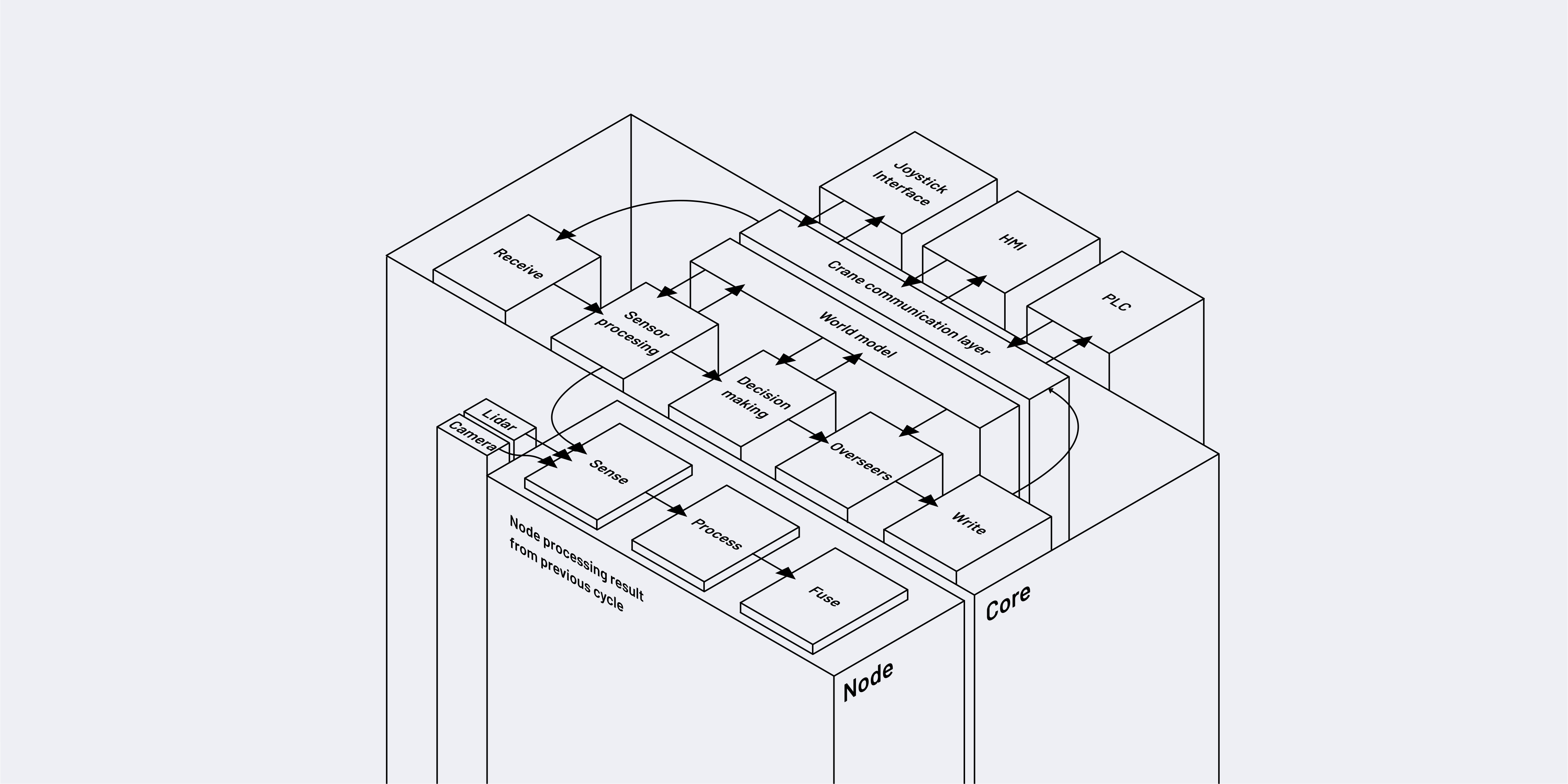
AutoCrane's cognitive architecture is based on the Belief-Desire-Intent (BDI) model. This architecture for cognitive systems simulates human-like decision-making behavior: beliefs represent the system's knowledge of the world, desires describe the states to be achieved, and intents are the specific plans currently being executed.
More info

Volker Voss
Managing Director Sales
Learn More about Industrial AI for Your Crane
Would you like to know more about our autonomous crane? Contact our sales manager directly. Please send us your questions using the button below. We’ll get in touch to schedule a personal consultation, during which we’ll discuss how our Industrial AI can lighten the load on your employees and support your bottom line.
Subscribe to Newsletter
PSIORI was founded in 2016 by and around former students and employees of the research groups Prof. Dr. Wolfram Burgard (Autonomous Intelligent Systems) and Prof. Dr. Martin Riedmiller (Machine Learning) of the Technical Faculty of Freiburg. In the areas of SLAM and Reinforcement Learning, these research groups have decisively driven the state of research. In our research, we have dealt with the topics of autonomous driving, mobile robotics, machine learning, neural networks, reinforcement learning and generative AI as well as in the application with problems from the areas of sensor processing, self-location and mapping and with robot, vehicle and machine control.